Why a Room’s Colors Can Change as a Film Unfolds
Track a film’s shifting room colors to see how production design marks a change in mood, character, or story without giving each hue a fixed meaning.
A room’s colors can change the scene’s emotional temperature before a character says anything about it. In a film, a room’s colors may shift because the set has been rearranged, a costume has entered the frame, or the story has reached a different moment. The useful question is not what a hue means in general, but what the film has made newly noticeable.
What should you notice on the first visit?
Choose a room that appears more than once and take in its broad design on the first visit. Notice the balance of large color areas: warm wood against pale walls, a dark sofa under a cool-toned scheme, or a green curtain beside a rust-colored chair. You do not need a paint chart; the visual hierarchy matters more than exact shade names.
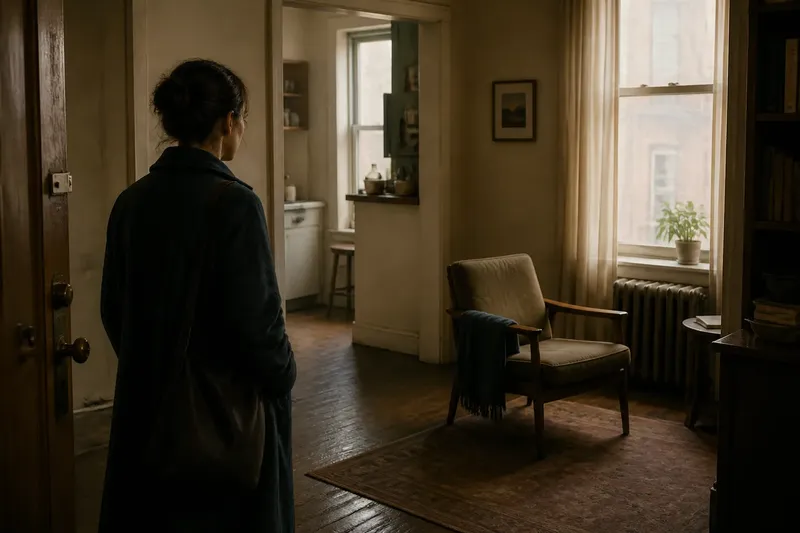
Separate the room’s permanent design from what characters bring into it. Walls, curtains, and furniture establish the set’s baseline. Costumes and handheld objects can interrupt that baseline, while lighting can alter the image without changing the physical arrangement.
- Notice which color occupies the largest areas; if it dominates the frame, treat it as the room’s visual baseline, and if it does not, look for the more prominent color relationship.
- Check which vivid object stands apart; if it draws the eye, note its location and owner, and if nothing stands apart, describe the room as visually even rather than inventing a focal point.
- Identify colors attached to costumes; if a character carries a strong color into the room, consider how it separates them from the set, and if clothing blends in, look instead at blocking or silhouette.
- Notice whether the furniture arrangement is stable; if seats or objects have moved, consider a change in use or activity, and if they remain fixed, do not attribute the shift to a rearranged room.
- Check whether the scene’s overall appearance has changed in warmth or contrast; if it has, consider lighting or grading as possibilities, and if it has not, focus on the altered objects and composition.
- Record who occupies the room; if someone is missing on a later visit, consider whether the empty place matters in the scene, and if the same people remain, look for changes in their positions or attention.
Keep the first observation literal. “The red chair is the only bright object” is more useful than deciding immediately that red stands for anger.
How can a return visit change the room’s meaning?
On a later visit, compare what has been added, removed, covered, or repositioned. Also notice what the camera chooses to include. A close view of a face and a wide view of the furniture cannot be compared as if they were identical records of the room.
A color can gain or lose emphasis without changing at all. A pale wall may seem warmer beside a cool coat; a red cushion may become conspicuous after the other colors recede. The shift may come from composition or from what the characters are doing, rather than from a newly meaningful object.
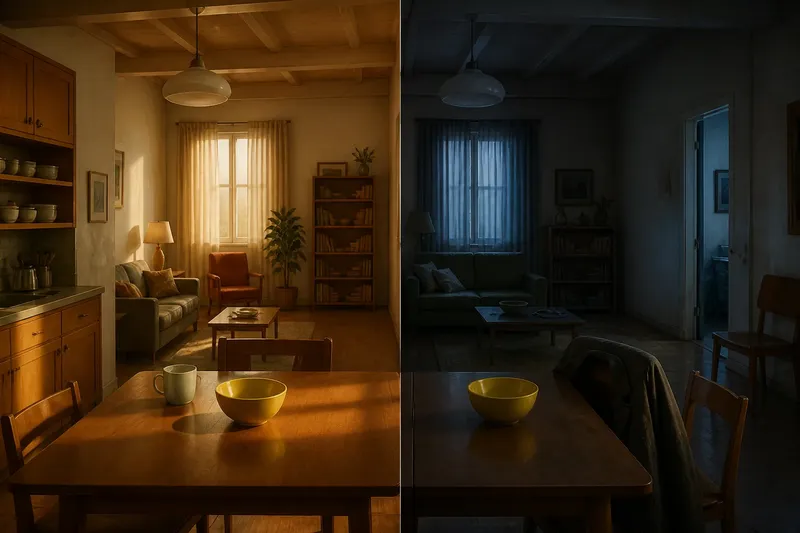
Say a fictional film first shows a kitchen with a yellow bowl among white dishes and warm wooden cupboards. After an argument, the same set returns with cooler-looking illumination; a dark coat lies over the chair beside the bowl, and one character leaves the frame. A viewer could note those steps in order: the set is still recognizable, the coat has appeared, and the empty place is now visible. The resulting reading might be that the scene emphasizes absence, though the next exchange could instead show the coat was simply left there during an ordinary interruption.
Record the visible change before choosing between those readings. The film may leave the distinction unresolved.
When does a palette shift suggest a change of place?
Different locations often have distinct design identities. A family home might use familiar warm colors, while an office favors cool neutrals; that contrast can orient the viewer before dialogue names the destination. A single location can also acquire a different character when a scene favors another corner, changes its dressing, or uses a different lighting setup.
Ask what kind of change the scene presents. A covered table or a moved chair is evidence of altered dressing or activity. A shift in the room’s overall appearance, with objects holding their positions, points toward lighting, cinematography, or color grading as possibilities. The finished image rarely tells you which department made a choice, so describe what is visible rather than claiming to know the production method.
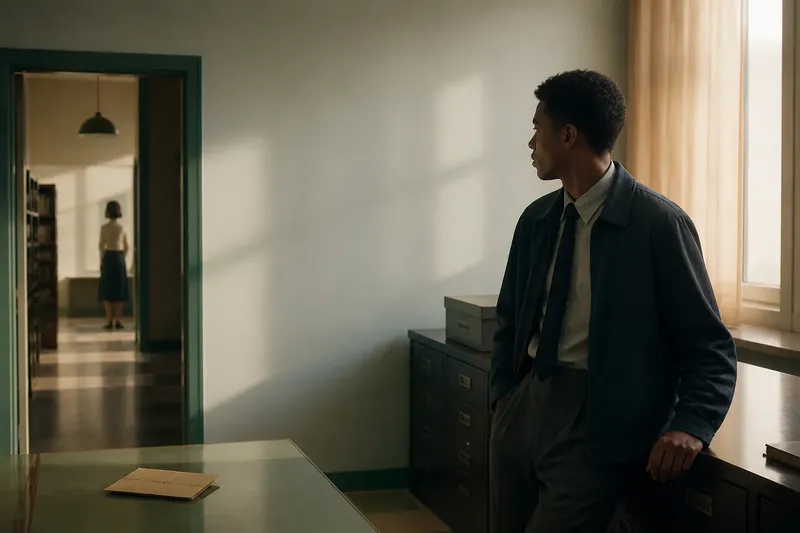
A recurring color can also connect separate locations. Green might appear first in a hallway, later on a jacket, and then in another room. That repetition can create a visual link; it does not by itself establish a shared symbolism or a specific plot connection.
Follow the recurrence, but leave its explanation open until the story gives you more to work with.
How can color show a relationship changing?
Costumes and set colors can make a relationship more or less legible in the frame. Two characters may initially wear colors that blend into the same room, then appear in stronger contrast later. A familiar color might also move from one character’s clothing to a shared object, bringing an earlier visual detail back into view.
Look for a pattern across scenes rather than treating one outfit as a verdict. Who wears the color? Who notices it? Does the arrangement change when the characters approach, turn away, or occupy opposite sides of the room? These questions keep color connected to blocking and composition, where its effect can be observed.
For instance, imagine a fictional drama in which two characters sit together at a table, their muted clothes blending into the set. Later, one wears a vivid green jacket and takes a seat across the room. The visible result is a sharper separation in the frame; whether it signals a disagreement, a new role, or simply a costume change depends on the surrounding scenes.
Which questions help read a room’s changing colors?
Does a repeated color always mean the same thing?
No. Its function can change with the scene, its placement, and the character who brings it into view. Track the recurrence before assigning it a stable role.
How can you tell whether the set or the image changed?
Look for moved, covered, or newly added objects. If the arrangement stays consistent while the image’s overall appearance shifts, lighting or grading may be involved; if objects have moved, the room’s dressing or use has changed too.
Can a room feel different without new furniture?
Yes. A costume, a changed camera angle, or a character’s new position can alter which colors dominate the frame. A room in a film is arranged for the shot, not merely listed as furniture.
What if a color shift has no clear explanation?
Keep the description and postpone the interpretation. The shift may distinguish scenes, establish atmosphere, or return with more relevance later. Not every visual choice arrives with a caption.
How do you keep an interpretation grounded?
Write down what changed before saying what it means. “The room looks cooler, and the coat stands out” is an observation. “Blue announces loneliness” is a broader claim that needs support from the film’s treatment of the characters and the scene.
Then consider ordinary alternatives. A costume may separate a figure from the background; a prop may have moved because someone used it; a lighting change may simply mark a different time of day. These explanations do not cancel a symbolic reading, but they prevent it from outrunning the evidence.
To analyze why a room’s colors change as a film unfolds, note the room’s first appearance, the later difference, and the story action that accompanies it. That sequence gives you a clear basis for judging whether the change points toward mood, character, or the practical life of the space. If the film keeps the evidence ambiguous, the ambiguity is part of the reading.